My blog has moved! Redirecting…

You should be automatically redirected. If not, visit www.gangles.ca and update your bookmarks.

The Quixotic Engineer

Sunday, December 9, 2007

Sunday Reading

December is a busy time of year. Busy cramming for the exams next week? Caught up in the holiday rush? Either way, you're probably online looking for an excuse to procrastinate for another hour or so. Here's some recommended reading to help you do just that.

First up is an article over at CGSociety about the visual design of Team Fortress 2. I've geeked out more than once about how much I love this particular aspect of the game, but reading this article has given me a new found respect for the team of animators at Valve. Among the piles of great concept art (including an early build of the Heavy with a mullet), the article explores how well-designed characters and maps can enhance the gameplay experience. Consider the following excerpt:
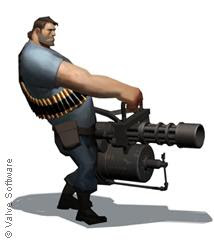
TF2 Heavy with Mullet

Due to the importance of the nine character classes to the gameplay, the team focused on them first. They established a "read hierarchy", a prioritized list of the information that players needed to extract from the character model. From most to least important, this was: the player's team, the player's class, and the player's current weapon, which usually implies the player's intent in our game.

They used the model color palette to represent the team, a somewhat suboptimal solution for varying lighting conditions, but a good tradeoff given the technology constraints. “We found that silhouette and animation were better long-range identification characteristics than texture detail or color,” says Jamaal Bradley, “so we used those for class identification. Finally, we tackled the weapon by using contrast and color gradients to draw the player's eye to the chest area, where the weapons are held.

What a powerfully simple idea: using colour, shading and silhouettes to draw the player's eye towards important information. It's this level of attention to detail that has garnered Valve so much critical acclaim and fan loyalty. For more TF2 reading, consider the recently released Steam statistics, which include heatmaps and other interesting tidbits (such as the fact that the Medic class is criminally underplayed.)

Secondly is a fascinating look at the Morris worm, a 99 line program that ended up infecting 10% of the Internet back in 1988. The creator, Robert T. Morris, was a grad student working at Cornell University who simply wanted to prove that it was possible to propagate a program by exploiting vulnerabilities in sendmail and Finger. However, due to a flaw in the reproduction algorithm, the benign worm ended up reproducing itself many times on the same computer, eventually tying up the CPU. While the Morris Worm has been overshadowed by some of the modern malignant worms, I highly recommend this article to anyone involved in software security as a case study from a time when the web was much more homogeneous.
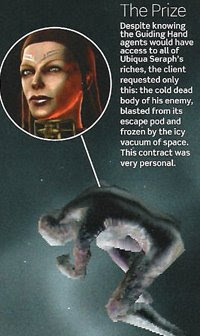
EVE Online Heist

Finally, a short article about one of the most famous and successful heists in MMORPG history, one that left the victim's character frozen dead in space and relieved of virtual goods worth an estimated $16,500 USD. It's a fascinating look into the world of EVE Online, a game that seems to be as much about political intrigue and skulduggery as it is about spaceships and mining. The story reads like a virtual Ocean's Eleven, and is an interesting commentary on the consequences of meeting people semi-anonymously in online worlds.

Have a great weekend, and best of luck in all your procrastinating.

Labels: , ,

Sunday, December 2, 2007

Features Every Game Should Have

Shigeru Miyamoto

I read a fascinating article last week over at Gamasutra entitled Game Feel: The Secret Ingredient, and it really got me thinking about game design. Game feel, as it is explained in the article, is an intangible quality that could be described by a game just feeling right. It's a fleeting elusive quality, something author Steve Swink believes may be tied to tight, responsive controls coupled with environments that respond to player actions with audio and visual cues. Game feel is important on a fundamental and subconscious level, where ideally the lines between man and machine begin to blur and thoughts translate naturally into on-screen actions

Today, however, I would like to take the time to consider aspects of game design that are much more concrete. While the feel may define a game's artistic merit and timelessness, there are very different aspects in play when we consider games as hobbies and entertainment. These qualities make a game fun to play with friends, playable for short periods of time, and challenging without being frustrating. Zack Hiwiller beat me to the punch with his excellent discussion of underused game mechanics, but I would like to consider the same question in a different way: what features should every game have, regardless of genre? Here's what I came up with, in no particular order:

  • Local Multiplayer: This one is a no-brainer. When I think back to the games that I logged hundreds of hours on, games like Super Smash Bros, Goldeneye and Mario Kart, their one common element was the ability to play them with friends over. Adding a solid co-op or cooperative mode can instantly add dozens of play hours to a game. The modern extension of this is the ability connect more than one person online from the same box (such as Halo 3), a feature that hopefully more games will adopt.
  • Unlimited Saves: Forcing players to reach some arbitrary save point is just a frustrating way to artificially inject challenge into a game. Allowing saves anytime not only makes it easier to pick up a game for 20 minutes, but also prevents the annoyance of having to repeat the same area many times over. This is an absolutely necessity in portable games; the otherwise terrific New Super Mario Bros. really flubbed it by enforcing the Super Mario World style "only save after castles" rule.
  • Good Voice Acting or None: Nothing shatters the illusion of a game world more than bad voice acting, second only to the bad writing that we've become so accustomed to. Considering the amount of time and money it takes to produce, publish and advertise a game, you would think that studios would cough up a little more to hire some real voice talent. If they aren't going to go that extra mile, then old-fashioned on-screen text might be the lesser of two evils.

These are just a few ideas off the top of my head and by no means represent an exhaustive list, so I throw the challenge out to you now: what features would you recommend for any game, regardless of genre?

Labels:

Sunday, November 18, 2007

Sorry I Shot You, I Was Trying to Sprint

Video game enthusiasts have had a deluge of great titles to choose from this fall. What started building momentum back in August with the release of Bioshock is coming to a head in November, with hotly anticipated titles such as Assassin's Creed, Super Mario Galaxy, Mass Effect and Rock Band arriving within scant weeks of each other.

While I'm by no means a sucker for all shooter games, it so happens that I've picked up a few excellent ones in the last few months: Halo 3, Call of Duty 4 and The Orange Box (which includes Half Life 2, Team Fortress 2 and the brilliant Portal.) These games earned scores of 94, 95 and 96 respectively on Metacritic, and are each thoroughly enjoyable in their own way.

However, playing all of these games in such a short period of time has made me realize how little consensus there is among FPS games with regard to controls. The A button is commonly used to jump, and the left and right sticks control movement and aiming respectively, but from there things become muddled. Consider the following:

Half Life 2 Team Fortress 2 Halo 3 Call of Duty 4
B Reload Reload Melee Crouch
X Pick Up Taunt Use Equipment Reload
Y Flashlight Show Scoreboard Swap Weapon Swap Weapon
L Bumper Sprint Previous Weapon Select Grenade Type Throw Secondary Grenade
R Bumper Toggle Weapon Next Weapon Reload Throw Frag Grenade
L Trigger Secondary Fire Secondary Fire Throw Grenade Aim Down Sights
Click L Crouch Crouch Crouch Sprint
Click R Zoom Call for Medic Zoom Melee

To summarize:

  • Reload: A, X or Right Bumper.
  • Change Weapons: Y or Left/Right Bumper.
  • Throw Grenade: Left Trigger or Left/Right Bumper.
  • Sprint: Left Bumper or Click Left.
  • Melee: B or Click R.

Should there be one standard control scheme for shooter games? I don't think so. There's a reason I don't manually edit the default controls for most games: programmers design games with the control scheme in mind. For instance, the three types of grenades in Halo 3 all do the same thing: blow up and cause damage. Therefore, it's not important to map them individually. In Call of Duty, however, being able to choose between a flashbang and a frag in an instant is critical, so each warrants a unique button.

That being said, there are some key functions that could benefit from a little consistency:

  • Reloading is important in every FPS title, so it deserves a standardized button. I think X would work well, but using Right Bumper seems to be the new trend.
  • If meleeing is a game option, it should be available without changing weapons (I'm looking at you Team Fortress 2.)
  • Map infrequently used functions, such as Taunt or View Scoreboard, to the D-pad (again, Team Fortress 2 got this wrong.)

As the interface between manual and digital, it is absolutely crucial to get game controls right for a game to feel fluid and natural. Here's hoping that future designers keep this in mind, or I might be cursed to accidentally frag my teammates for the next decade.

Labels: ,

Friday, October 19, 2007

A Step Towards Parity

For those who are perhaps not aware of the situation, for many years the Canadian dollar was worth 0.70 - 0.90 cents to the US Dollar. Recent events in both countries have pushed the exchange rate closer to 1.035, which is great news for consumers in theory. However, many US-made goods have yet to match their prices to this new parity, video games included.

For instance, The Orange Box costs $59.99 USD at Amazon.com, but La Boite Orange costs $64.99 CAN at Amazon.ca. The same is true for all games; we're consistently paying 5-10% more for nothing.

It is for this reason that I salute Sony / Playstation 3 for taking the first step towards video game price parity for Canadians by matching the price on both their consoles and PSN downloads. Hopefully this move will force Microsoft and Nintendo to get their act together and price their games more fairly.

PS: Much support to my PAL brothers and sisters who have been putting up with even more ridiculously inflated prices for years.

Labels: ,

Thursday, October 11, 2007

Fez

A friend of mine from work got Joystiq'd today. In his free time, Renaud is the lead programmer for a game called Fez, a platformer game being developed by Kokoromi Collective, which is also entered in this year's Independent Games Festival.

Having tried the beta firsthand, I think the game will be a strong contender. Similar 2D/3D mechanics have been explored in games like Super Paper Mario and Crush, but Fez has enough interesting twists to be original in its own right. The graphics are vibrant and have an Earthbound-like quality to them, accentuated by the intentional 8-bit look. Furthermore, the physics for jumping are as tight as any Mario game, which is essential in a platformer.

Best of luck to Renaud and Phil Fish in the IGF!

Labels:

Sunday, September 30, 2007

The Technical Challenges of Gaming

Developing Video Games

There's a fascinating article in the online version of Popular Science magazine entitled The Hard Science of Making Video Games. It details the technical challenges that high end video game developers face when pushing the envelope on next-gen features. Written in an very accessible way, it's a great read even for those with little computer knowledge. In case that link ever expires, the top challenges/limits are as follows:

  1. Processing Power
  2. Water
  3. Human Faces
  4. Artificial Intelligence
  5. Light and Shadows
  6. Fire
  7. Material Physics
  8. Realistic Movement
  9. True-to-Life Simulation
  10. Motion Capture

Labels: ,

Wednesday, July 25, 2007

Final Fantasy Retrospective

Final Fantasy

I was recently directed to new video series over at Gametrailers.com, a retrospective of the Final Fantasy series. While I'm all for nostalgia, I'm becoming a little jaded by it. I'm happy to see gamers acknowledge their roots, but frankly I'm tired of game companies looking to cash in by exploiting my childhood memories.

I was, however, pleasantly surprised at the quality of this retrospective. I expected a cheesy montage of gameplay footage, but instead found that the videos explored some interesting questions: How was Final Fantasy radically different to other games at the time? What innovations did it each sequel bring to the RPG genre? How were the early games unbalanced?

I've embedded Part 1 of the series below. They seem to be doing a new video every week, so I'll update my links when new videos come out. You may also want to check out their Metroid and Zelda series retrospectives, which are also good.

Labels: ,

Monday, July 23, 2007

Snake vs Zombie

Snake vs Zombie

Interviews with game developers don't usually interest me, generally because the interviewees always come off as salesmen and rarely just want to talk openly and honestly. Even if you're similarly jaded, I urge you not to overlook the recent Snake vs Zombie event interviews, which featured a trio of important designers: Hideo Kojima (Metal Gear Solid), Shinji Mikami (Resident Evil, Viewtiful Joe, Devil May Cry) and Suda 51 (Killer 7).

Unlike typical gaming industry interviews, none of the designers were pushing any game in particular. While Suda 51 chaired the event, there was no interviewer as such; it was more akin to a conversation than a question and answer session. In the video (embedded below), they discuss various topics, remaining only vaguely topical at times. Highlights include Kojima's semi-serious pitch for a Resident Evil Online game, discussions about Season 2 of Lost, Mikami's rental of "Dino Kung-fu", good-natured teasing about Killer 7's development, and thoughts regarding console platform politics.

If you're interested in hearing some of the most respected names in the video game industry talk in a very relaxed and casual setting, I highly recommend you invest 26 minutes in the video below.

Labels: ,